

If it feels harder than ever to get people to pay attention at events, it’s because it is. Between phones, social, and crowded inboxes, your audience is being pulled in tons of directions before they even arrive to your gig. The good news? That same distraction problem is exactly why smart, tactile print and physical mail are having a real comeback in the event world.
When everything is a notification, anything you can actually hold in your hands becomes memorable.
The attention crisis meets the event floor
Think about a typical event guest’s day. Before breakfast, they have already scrolled past dozens of ads, swiped away pop‑ups, and deleted a bunch of promotional emails. By the time they land at your conference, trade show, or customer event, their mental filter is set to “ignore.”
On the event floor, your brand is competing with:
- Hundreds of booths trying to out‑shout each other
- Digital signage blending together
- Apps and email reminders chiming in all day
This is where print has a distinct advantage. A well‑designed badge, a clearly branded map, a bold directional sign, or a tactile welcome kit is not just “nice to have.” It’s a tool for managing attention in real space, in real time.
Why physical touchpoints stick
We talk to clients all the time who say some version of, “We’re spending more on digital, but it doesn’t feel like we’re getting more attention.” Events are one of the few places left where you can still create a controlled, physical brand experience from start to finish.
Print helps you do that in three key ways:
- Visibility: A great event graphic, banner, floor cling, or hanging sign doesn’t scroll away. It anchors your brand in the room and helps attendees orient themselves.
- Dwell time: People spend more time with materials they physically handle. Whether it’s program books, pocket schedules, table tents, dimensional invitations, or VIP kits. Even a few extra seconds with your message can be the difference between “I saw your logo” and “I remember what you do.”
- Follow‑through: When a piece goes home with them: a leave‑behind, a cleverly designed mailer, a sample in branded packaging, it continues to work long after the last day of the show or event.
At a time when most marketing is built for the swipe, and is measured in nano-seconds, these extra moments and extra impressions matter.
Direct mail as the event’s opening act
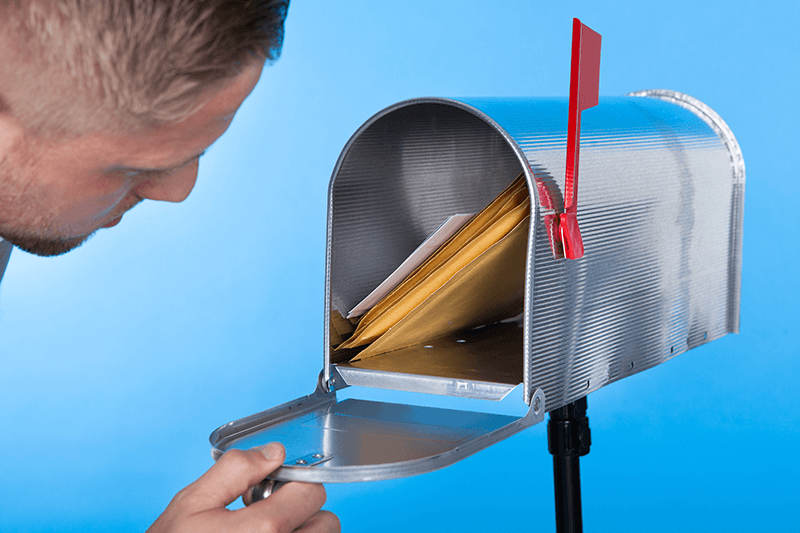
One of the most underused levers in event marketing is pre‑event and post‑event mail. The default is usually a couple of email blasts and some social posts, and then everyone wonders why attendance or booth traffic feels soft and leaves leaders asking whether the spend was worth it.
A smart, well‑timed mailer can change the whole trajectory:
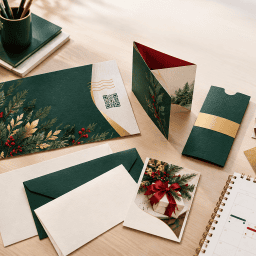
- Before the event: A dimensional invite, a teaser piece, or a “save the date” that does more than sit in an inbox. Think: a folded piece that turns into a desk tent, a mini calendar, or a small sample in a branded sleeve.
- During the event: Badges, registration packets, and room‑drop pieces that feel cohesive and intentional, not like a random stack of flyers.
- After the event: A follow‑up mailer that thanks attendees, highlights key takeaways, and gives them a clear next step (scan a QR code, book a meeting, or redeem an offer.)
We’ve seen over and over that when you pair events with targeted mail, you don’t just get more eyeballs.
You get stronger engagement. People are more likely to show up when they’ve already held something from you in their hands. And afterward, a thoughtful physical follow‑up stands out among the flood of “Thanks for attending” emails.
Specialty packaging and “souvenir media”
Events are expensive. Booth space, travel, labor, sponsorships, content, AV. The bill adds up fast. That’s exactly why it’s smart to think about certain printed pieces as “souvenir media.”
If someone keeps it, it keeps working.
Specialty packaging, custom kitting, and special projects can turn a standard touchpoint into something that lives on:
- A press or influencer kit that feels like an unboxing moment, not just a folder of materials
- A product sample packed in a way that practically begs to be photographed and shared
- A VIP gift box shipped before the event that sets the tone and gets people excited
When these pieces are part of a coordinated event and direct mail plan, they stop being just “swag” and become part of your serious marketing toolkit.
Turning events into measurable campaigns
If you’re planning your next event, it might be time to flip the usual script. Instead of asking, “What can we print to support this event?” ask:
“How can print and mail help us win the attention game before, during, and after?”
Start with a few simple steps:
- Choose one key pre‑event mailer that earns the RSVP.
- Audit your on‑site experience for gaps where print could guide, welcome, or surprise attendees.
- Plan a post‑event piece that feels substantial enough to keep and easy enough to act on.
Events will always be about people in a room. But in 2026 and beyond, the brands that win at events will be the ones that treat every physical touchpoint as a strategic moment to capture and keep attention, not just another line item on the checklist.